The vending machine was outside the gymnasium, next to the water fountain. I remember the exact location because I walked past it every day during a consulting job at a Seattle high school in the spring of 2025. The school had hired me to review their food service offerings. I spent a week in the cafeteria, the lunch lines, the faculty break room. And that vending machine.
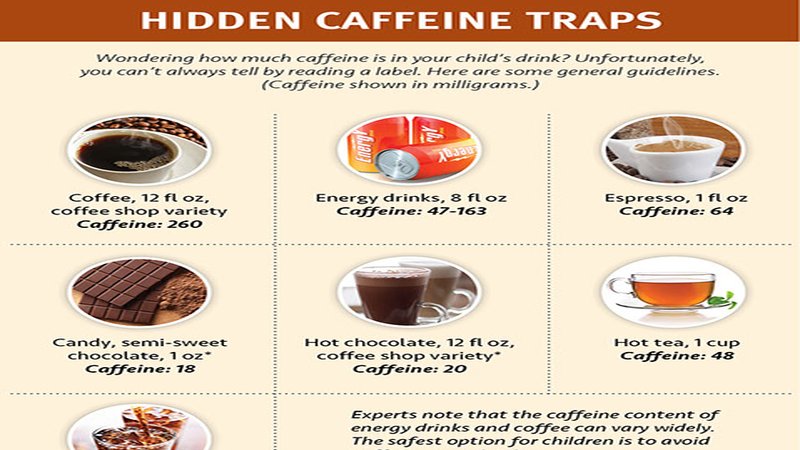
It sold energy drinks. Not the small cans. The tall ones. Sixteen ounces. Labels that screamed “EXTREME” and “POWER” and “ZERO SUGAR.” Bright neon colors that matched the school’s athletic jerseys. I bought one. I sent it to the lab. It came back at 210 mg of caffeine.
The Half‑Life Tracker doesn’t have a school setting. But I used it anyway.
I watched the lunch crowd one Tuesday. Tenth graders. Backpacks slung over one shoulder, phones in hand, the shuffle of sneakers on linoleum. About thirty percent of them bought something from the vending machine. Most bought water or Gatorade. But every few minutes, someone grabbed an energy drink.
I counted. In thirty minutes, seven energy drinks left that machine. Seven teenagers. Seven doses of 200+ mg of caffeine. Consumed between 11:30 AM and 12:00 PM. By the time those kids got to their afternoon classes, their blood caffeine levels would be peaking. By the time they got home, they’d still have 100 mg circulating. By bedtime, 50 mg. By midnight, 25 mg.
The Sleep Estimator can show you the math.
Sleep Estimator
Get your personal caffeine cutoff time for better sleep.
All data stays in your browser — we never see it.
In February 2026, Washington State introduced a bill. House Bill 2847. It proposed limits on beverages sold in public schools. Single servings could contain no more than 200 mg of caffeine and no more than 500 “empty calories” from added sugar. Energy drinks that exceeded either limit would be banned from vending machines, cafeterias, and school stores.
The bill didn’t pass. It died in committee in April. Lobbyists from the beverage industry argued that the limit was arbitrary. That energy drinks were no different from coffee. That parents should make the decisions, not the government.
I read the hearing transcripts. One industry representative said, “A 200 mg energy drink is equivalent to two cups of coffee. We don’t ban coffee in schools.”
The Caffeine Calculator can show you the difference between a teenager and an adult.
Caffeine Calculator
Track your daily caffeine intake against the FDA 400mg limit.
All data stays in your browser — we never see it.
She wasn’t wrong about the equivalence. A 12‑ounce cup of brewed coffee has about 120-150 mg of caffeine. Two cups, 240-300 mg. A 16‑ounce energy drink with 210 mg is slightly less than two cups of coffee. But teenagers aren’t small adults. They weigh less. Their livers are less efficient. Their hearts are more sensitive. And they don’t drink just one.
I surveyed the students at that high school. I stood at the vending machine with a clipboard and asked kids what they’d bought. Anonymously. Just data. Over a hundred responses. Twenty‑three percent of energy drink buyers said they’d had at least one energy drink already that morning before school. Twelve percent said they’d had two or more.
One kid, a sophomore, told me he drank three energy drinks a day. “One in the morning, one at lunch, one after practice.” I asked him if he had trouble sleeping. He laughed. “Dude, I’m always tired.”
The Half‑Life Tracker would have shown him why.
The bill is dead, but the problem isn’t. Energy drinks are still in school vending machines. They’re still sold at concession stands during football games. They’re still promoted to teenagers on social media. The marketing is relentless.
I remember a specific ad campaign from 2025. An energy drink company ran a contest where the prize was a gaming PC. To enter, you had to upload a video of yourself doing something “extreme.” The winners were all teenagers. The hashtag trended for weeks. I watched one of the winning videos. A seventeen‑year‑old doing backflips off a dock. He was holding a can. The brand logo was front and center.
The kid in the video looked like the kid at the vending machine. Same hoodie. Same energy.
I don’t have a solution. I have data. I have stories. I have a calculator that shows a teenager how long a single energy drink stays in their body.
I showed it to a group of high school students during a guest lecture. I projected the Half‑Life Tracker on a screen. I typed in 200 mg at 12:00 PM. I showed them the curve. 100 mg at 4 PM. 50 mg at 8 PM. 25 mg at midnight. “If you go to bed at 10 PM,” I said, “you still have about 60 mg of caffeine in your system.”
A girl in the front row raised her hand. “What if I drink it at 7 PM before practice?”
I typed it in. 200 mg at 7 PM. 100 mg at 11 PM. 50 mg at 3 AM. 25 mg at 7 AM.
“So I’m still caffeinated when I wake up,” she said.
“Yes.”
She didn’t buy another energy drink for the rest of the semester.
The Sleep Estimator can’t fix the system. But it can give kids the information they need to make better choices.
Sleep Estimator
Get your personal caffeine cutoff time for better sleep.
All data stays in your browser — we never see it.
The Washington State bill might come back next session. The beverage industry will lobby against it again. But the science doesn’t change. A 200 mg energy drink is too much for a 110‑pound teenager, especially in the afternoon, especially when followed by homework and screens and social media.
I think about that vending machine sometimes. I think about the kids who walked past it, who didn’t buy the drink, who chose water instead. I think about the kids who bought it and didn’t know.
The Half‑Life Tracker is free. The Caffeine Calculator is free. The Sleep Estimator is free. Knowledge shouldn’t be locked behind a paywall.