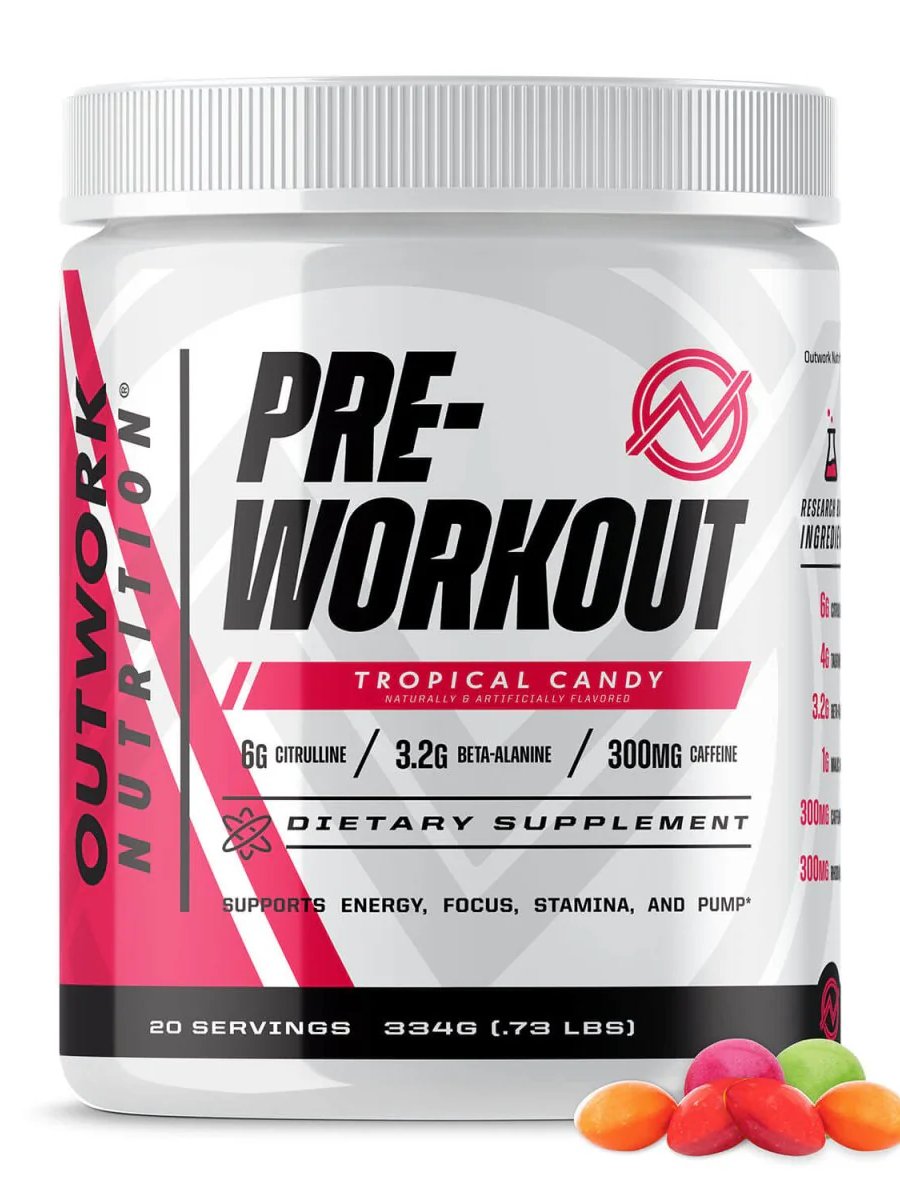
That Pre-Workout Powder Has 400mg of Caffeine. And That's Not Even the Worst Part.
400 milligrams. That's what the label said. One scoop. Four hundred. I stood in my Capitol Hill loft holding the tub, staring at the number like it was a typo. It wasn't. The serving size was one scoop, and one scoop contained 400mg of caffeine. That's the FDA's entire daily recommended limit in a single drink. In a powder you mix with water and chug before leg day.
I'm a food scientist. I used to cup 200 coffees a week as a Q Grader. I've measured caffeine with HPLC. I know what 400mg looks like in a chromatograph — a beautiful sharp peak that screams "this is a drug, not a beverage." And yet here it was, sitting on my kitchen counter, marketed as a fitness supplement, available to anyone with a credit card and a dream of bigger quads.
Sam walked in while I was still staring. My partner. The tea drinker. The person who sips English Breakfast at 9 PM and falls asleep by 9:30. She looked at the tub, looked at me, and said, "You're not actually going to drink that, are you?"
I didn't. I poured it into the trash. But I kept the label. I scanned it. I added it to my database. Because this is what I do. I track caffeine. I have 350+ commercial beverages in my spreadsheet, all with lab-verified or manufacturer-reported caffeine content. And this pre-workout was the highest single-serving item I had ever logged. Higher than a 20-ounce drip coffee from Starbucks. Higher than two cans of Monster. Higher than anything that should be sold without a warning label.
The worst part wasn't even the caffeine. It was what else was in there. The label had a "proprietary blend" of 6 grams. That's six grams of unspecified stimulants, amino acids, and whatever else the manufacturer decided to throw in. No breakdown. No milligram amounts. Just "proprietary blend." In the food science world, that's code for "we don't want you to know." And in the caffeine world, that's code for "this could interact badly with your medication, your genetics, or your common sense."
I looked up the company. Founded in 2021. No published research. No peer-reviewed studies. Just influencer marketing and before-and-after photos. The kind of operation that treats caffeine like a magic bean instead of a psychoactive drug with a well-documented half-life and a long list of drug interactions.
Here's the thing about 400mg for someone like me. I'm a CYP1A2 slow metabolizer. I found out during my master's at WSU. It means my liver clears caffeine at roughly half the speed of a fast metabolizer. So 400mg for me is not 400mg. It's more like 800mg in terms of duration and peak blood concentration. It's a dose that could keep me awake for 18 hours, elevate my heart rate into the anxiety zone, and trigger the palpitations I used to get in grad school when I was living on espresso and deadlines.
But the label doesn't ask about your genetics. It doesn't ask about your medications. It doesn't ask if you're on fluvoxamine, which can reduce CYP1A2 activity by 90%. It doesn't ask if you're pregnant, where caffeine's half-life triples. It just says "take one scoop 30 minutes before training." And it sells.
I talked to a trainer at my gym last week. He was drinking a pre-workout with 350mg. He said he needed it to "feel the energy." I asked him when he last slept through the night. He laughed. "What's sleep?" I didn't laugh. Because that's not a joke. That's a side effect. And it's one that millions of people are experiencing because the supplement industry has convinced them that fatigue is a personal failure, not a biological signal.
The half-life of caffeine is 5-6 hours in a healthy adult. In a slow metabolizer, it's 8-10 hours. In someone on certain medications, it can be 12-15 hours. That means the 400mg you take at 5 PM is still actively circulating at 2 AM. It's still blocking adenosine receptors. It's still telling your brain that you're not tired, even when every other system in your body is screaming for rest.
I don't tell people to quit caffeine. I drink coffee myself — 200mg in the morning, nothing after 12 PM. Caffeine is a tool. It improves alertness, reaction time, and even certain aspects of athletic performance. But it's dose-dependent. And 400mg in a single serving is not a dose. It's a dare.
If you're using pre-workout, read the label. All of it. Not just the caffeine number — the whole thing. If it says "proprietary blend," put it back. If the caffeine is over 200mg per serving, ask yourself why. If you don't know your CYP1A2 status, assume you're a slow metabolizer. Because about 50% of the population is, and the downside of assuming you're fast when you're slow is much worse than the reverse.
Measure it. Track it. Treat it like the drug it is. Because the supplement companies won't do it for you. They're too busy counting money and writing proprietary blends.
— Alex, from a loft in Capitol Hill where the only pre-workout is a good night's sleep
P.S. Espresso the cat sleeps 20 hours a day. No pre-workout required. Just natural talent.
