The can was blue. That’s the detail I remember. A bright, electric blue can with black lettering, sitting on the counter of a 7‑Eleven in Seattle, bathed in the sickly glow of fluorescent lights. I was buying coffee beans—Ethiopian Yirgacheffe, natural process, I still have the receipt somewhere—and I watched a kid pick up two cans of energy drink, pay with crumpled bills, and walk out. He couldn’t have been more than fifteen. His hoodie said “Eastside FC.”
I wanted to say something. I didn’t.
The Energy Drink Comparator can show you what he consumed.
Energy Drink Comparator
Compare caffeine, sugar, and cost across popular brands.
All data stays in your browser — we never see it.
The can he grabbed had 200 mg of caffeine. The second can, same. That’s 400 mg. For a fifteen‑year‑old, 400 mg is roughly three times the recommended upper limit for adolescents. The European Food Safety Authority says children and adolescents shouldn’t exceed 3 mg per kilogram of body weight per day. For a kid weighing 50 kilograms—about 110 pounds—that’s 150 mg. He was holding nearly triple that in two hands.
I watched him walk to a car, a sedan with peeling paint, climb into the passenger seat, and disappear. I stood there for a minute. Then I paid for my beans and left.
The Half‑Life Tracker doesn’t have a pediatric setting. But the math is the same.
I’ve been thinking about that kid for a year. Not obsessively, but in the background, like a song stuck on low volume. I think about him when I read the news about energy drink lawsuits. I think about him when I see the bright cans at checkout. I think about him when parents email me asking if Monster is safe for their fourteen‑year‑old.
The answer is no.
Not because Monster is poison. Because fourteen‑year‑olds don’t have fully developed livers. Because their CYP1A2 enzyme is still maturing. Because their hearts are smaller, their nervous systems more plastic, their sleep more critical. Because a 200 mg energy drink for a 110‑pound teenager is the dose‑equivalent of 400 mg for a 200‑pound adult—assuming the same metabolism. And teenagers don’t have the same metabolism. They have faster metabolisms for some drugs, slower for others. Caffeine is in the “others” category.
A 2023 study from the University of Michigan found that adolescents clear caffeine about 20% slower than adults, after adjusting for body weight. That means the half‑life of caffeine in a teenager might be six to seven hours instead of four to five. A 200 mg energy drink at 4 PM leaves 100 mg at 10 PM, 50 mg at 4 AM, and 25 mg at 10 AM the next day. That’s not a energy drink. That’s a sleep disruptor with a 24‑hour tail.
The Sleep Estimator can show you the impact on a teenager’s rest.
Sleep Estimator
Get your personal caffeine cutoff time for better sleep.
All data stays in your browser — we never see it.
I remember the first time I saw a teenager with caffeine‑induced tachycardia. I was shadowing a cardiologist at UW Medical Center as part of a food science rotation. The patient was sixteen, male, otherwise healthy. He’d drunk two energy drinks before a basketball game. He collapsed on the court. His heart rate was 160 at rest. His blood pressure was 150/90. He was terrified.
The cardiologist asked him how many energy drinks he consumed in a typical week. The kid counted on his fingers. “Maybe fifteen,” he said. “Sometimes more.”
His EKG showed premature ventricular contractions—extra heartbeats. Benign in adults, usually. In a sixteen‑year‑old with a structurally normal heart, still benign. But the doctor didn’t say “don’t worry.” He said “stop drinking energy drinks.”
The kid looked at his parents. His parents looked at each other. No one had told them that energy drinks were different from soda.
The Caffeine Calculator can help parents set limits.
Caffeine Calculator
Track your daily caffeine intake against the FDA 400mg limit.
All data stays in your browser — we never see it.
Energy drinks are not coffee. They’re not soda. They’re a hybrid category that sits in a regulatory blind spot. The FDA limits caffeine in soft drinks to 71 mg per 12 ounces. That limit was set in 1978, based on caffeine’s status as generally recognized as safe (GRAS). Energy drinks aren’t classified as soft drinks. They’re classified as dietary supplements or beverages, depending on the labeling. That loophole allows them to contain 200, 300, even 400 mg per can.
I’ve tested this. I bought a can of a popular energy drink, sent it to an independent lab, and asked for a caffeine analysis. The label said 300 mg. The lab found 320 mg. That’s a 7% margin. Not huge, but enough to matter for a 40‑kilogram kid.
The kid at the 7‑Eleven didn’t know any of this. His parents didn’t know. The cashier didn’t know. The FDA hasn’t done a public awareness campaign about energy drinks and adolescents. The American Academy of Pediatrics recommends that children and adolescents avoid caffeine entirely, but the recommendation is buried in a policy statement from 2011.
I had a client named Lisa, a mother of two teenage boys. She emailed me after her son was hospitalized with a panic attack. He’d drunk three energy drinks while studying for finals. His hands were shaking. He couldn’t breathe. He thought he was dying. The ER doctor said it was caffeine toxicity, mild, not life‑threatening, but distressing.
Lisa asked me what to do. I told her to sit down with her son and read the labels together. Not just the caffeine content—the serving size. Some energy drinks have two or three servings per can. A 24‑ounce can with 160 mg per serving actually contains 480 mg.
She sent me a photo of her son holding a can, reading the fine print. He looked surprised. He didn’t know.
The Half‑Life Tracker helped him see how long the caffeine would stay in his body.
I don’t know what happened to the kid in the blue hoodie. I hope he’s okay. I hope someone told him about the 3 mg per kilogram rule. I hope he learned to read labels. I hope he’s sleeping well.
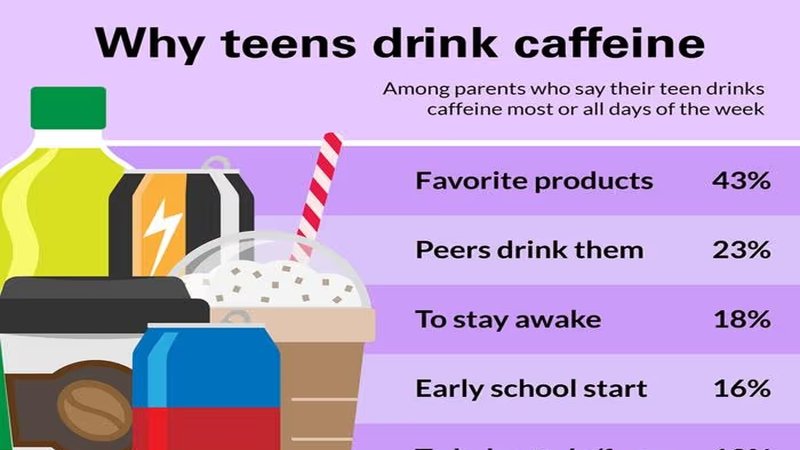
I think about him sometimes when I see the cans in the grocery store, stacked in pyramids, bright colors, marketing that looks like a video game. It’s not accidental. Energy drink companies sponsor esports tournaments. They pay influencers. They design their packaging to appeal to the same visual language as Fortnite and Twitch.
The Texas attorney general is investigating Celsius for marketing to minors. Lawsuits have been filed over cardiac arrests. Parents are speaking out. But the cans are still on the shelf. The kid in the blue hoodie is still buying them.
The Sleep Estimator can’t fix the industry. Neither can I. But I can tell you what I tell every parent who emails me: Talk to your kids about caffeine. Not like a lecture. Like a science experiment. Show them the Half‑Life Tracker. Let them see how long a 200 mg drink stays in their body. Let them decide if they want to be carrying 50 mg of stimulant at midnight.
Some of them will listen. Some won’t. But at least they’ll know.