Seattle hit 95°F last Tuesday. I know that doesn't sound like much to people in Phoenix or Dallas. But Seattle is not built for 95 degrees. We don't have air conditioning in most apartments. We don't have pools. We have fans that move hot air around and complain about it. And I learned something new about caffeine that day: heat changes everything.
I drank my usual morning coffee. Two cups, Ethiopian single origin, about 200mg of caffeine total. Then I went for a run at 10 AM because I'm an idiot who thought "it's Seattle, how bad can it be?" It was bad. By mile two, my heart was hammering at 175 bpm. My watch thought I was sprinting. I was jogging. Slowly. Very slowly. But my body was working overtime to cool down, and the caffeine was making my cardiovascular system work even harder.
Caffeine is a diuretic. In heat, that means you're losing water faster than you realize. I was sweating buckets — Seattle humidity makes 95 feel like 105 — and the caffeine was telling my kidneys to dump even more fluid. By the time I got home, I was lightheaded, slightly nauseous, and my urine was the color of dark amber. Not good. Not good at all.
I looked up the research. Caffeine toxicity risk increases significantly when ambient temperature exceeds 90°F. Your body is already stressed by thermoregulation. Adding a stimulant that raises heart rate, constricts blood vessels, and promotes fluid loss is like pouring gasoline on a campfire. It might be fine. It might also send you to the ER.
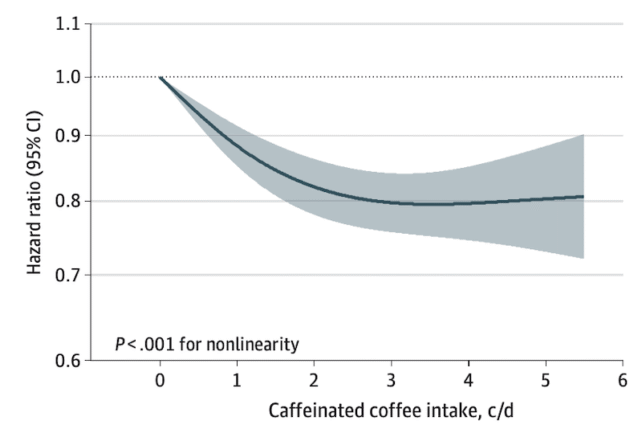
I'm usually the guy who defends moderate caffeine use. I wrote an entire article about how the JAMA study shows coffee protects your brain. But context matters. Caffeine in a cool room at 8 AM is not the same as caffeine in a heat wave at 10 AM. Your body is not the same. Your metabolism is not the same. The risk profile is completely different.
So here's my new heat wave rule: one cup before 9 AM, then switch to water or electrolyte drinks. No afternoon coffee when it's over 90. No pre-workout caffeine if I'm exercising outdoors. And if I feel even slightly off — elevated heart rate, dizziness, nausea — I stop everything and cool down. Caffeine is a tool, but tools can hurt you if you use them wrong.
Seattle cooled down to 72 by Friday. I had my second cup at 10 AM and enjoyed it properly. The heat wave was a reminder that even good things have limits. Even coffee. Even in a city that thinks 75 is a heat wave.
I talked to my doctor about this. She sees heat-related issues every summer now, even in Seattle. "Last year I had three patients in one week with caffeine-related dehydration," she said. "All of them were healthy, active people who just didn't realize how much the heat changes the equation." She recommended cutting caffeine intake by 50% on days over 90°F and avoiding it entirely during outdoor exercise in heat. That's conservative, but she's seen what happens when people don't adjust.
I also looked at the data on caffeine and core body temperature. Caffeine raises metabolic rate by 3-11%, which means your body generates more heat internally. In a cool environment, that's fine. In a heat wave, it's like turning up the thermostat when the air conditioner is already broken. Your body has to work harder to dissipate the extra heat, which means more sweating, more fluid loss, more cardiovascular stress. It's not just the diuretic effect. It's the whole thermogenic package.
So I'm being more careful now. I check the weather before I check my coffee supply. I have a heat wave protocol: one morning cup, then switch to cold water with electrolytes. No exceptions. Because as much as I love coffee — and I do, I really do — I love not passing out on the Burke-Gilman Trail even more. Caffeine is a tool. Tools have limits. And 95 degrees in Seattle is one of them.
— Alex
