My Caffeine Habit Nearly Sent Me to the ER During Seattle's Hottest June on Record
Alex Morgan
I was on my third cold brew of the day when the dizziness hit. Not the pleasant buzz of caffeine doing its job. Not the mild jitters that come from one cup too many. This was different. The room tilted. My heart raced. My hands shook so badly I couldn't type. I was sitting at my desk in my Capitol Hill apartment, the thermometer on the wall reading 89°F at 4 PM, and I realized I had made a terrible mistake. I had treated a heat wave like a normal Seattle summer and caffeinated my way through it like I always do. But 89°F in an apartment with no air conditioning is not normal Seattle. And three cold brews in a body that's already fighting to stay cool is not just a caffeine habit. It's a recipe for heat-related illness with a stimulant chaser.
I've been a coffee person since college. Not a snob, just a person who needs caffeine to function. I track my intake because I'm a data nerd and because my doctor once told me I was drinking "an objectively irresponsible amount of coffee." My baseline is 350 milligrams a day. Two cups in the morning, an iced coffee after lunch, maybe a cold brew if I'm dragging in the afternoon. It's a lot, but it's my normal. In June 2026, Seattle had seven consecutive days over 85°F. My apartment, which faces south and has windows that don't open more than four inches because of the building's earthquake retrofit, turned into a greenhouse. The indoor temperature peaked at 91°F on June 23rd. And my caffeine intake peaked at 620 milligrams on the same day. Because I was exhausted from not sleeping in the heat, and my solution to exhaustion was more coffee. Obviously.
Here's what caffeine does in extreme heat that nobody warned me about. Caffeine is a diuretic. It increases urine output. In a cool environment, that's mildly annoying. In a heat wave, it's dangerous. Your body is already losing water through sweat at an accelerated rate. You're already dehydrated before you drink your first cup. Then you add a diuretic that forces your kidneys to pull even more water from your bloodstream. The result is a compounding dehydration that your brain doesn't register because caffeine is also a stimulant that masks fatigue. You feel awake. You feel alert. You feel fine. Meanwhile, your blood is getting thicker, your heart is working harder, and your core temperature is creeping up because you don't have enough fluid volume to dissipate heat through sweating.
I didn't know any of this until I ended up in urgent care. Not the ER, thankfully. Urgent care. The doctor, a tired-looking woman who had seen six heat-related cases that day already, asked me what I'd had to drink. I told her about the cold brews. She asked how much water. I realized I hadn't had any plain water that day. Just coffee. Coffee and a seltzer at lunch. She looked at me like I had confessed to a crime. "Caffeine and heat," she said, shaking her head. "It's like drinking and driving. Everyone thinks they're fine until they're not." She told me I was moderately dehydrated and experiencing caffeine toxicity exacerbated by thermoregulatory stress. My heart rate was 112. My blood pressure was elevated. My urine was the color of dark tea. I got an IV bag of saline and a lecture that I will never forget.
The sleep connection is the other half of this disaster. Caffeine has a half-life of about five hours. That means if you drink a cold brew at 4 PM, half of the caffeine is still in your system at 9 PM. A quarter is still there at 2 AM. In a cool environment, you might still fall asleep because your body can cool down and override the stimulant effect. In a heat wave, your body can't cool down. The ambient temperature is too high for your core temperature to drop to sleep-ready levels. So the caffeine keeps you awake, and the heat keeps you awake, and you lie there staring at the ceiling until 3 AM, at which point you decide that you clearly need more coffee to get through the next day. It's a vicious cycle. I was sleeping four hours a night. Sometimes three. And I was compensating with caffeine that was making the sleep problem worse and the heat problem worse simultaneously.
I started tracking everything after the urgent care visit. My caffeine intake. My water intake. The indoor temperature. My sleep quality. My heart rate. I wanted to see the pattern. It was unmistakable. On days when the indoor temp was below 75°F, my 350mg caffeine habit caused no problems. My sleep was fine. My heart rate was normal. On days when the indoor temp was above 82°F, the same caffeine intake produced elevated heart rate, worse sleep, and what I now recognize as early dehydration symptoms. On days above 88°F, even 250mg—less than my normal baseline—made me feel jittery and nauseous. The heat wasn't just making me uncomfortable. It was changing my body's response to a substance I'd been consuming safely for fifteen years.
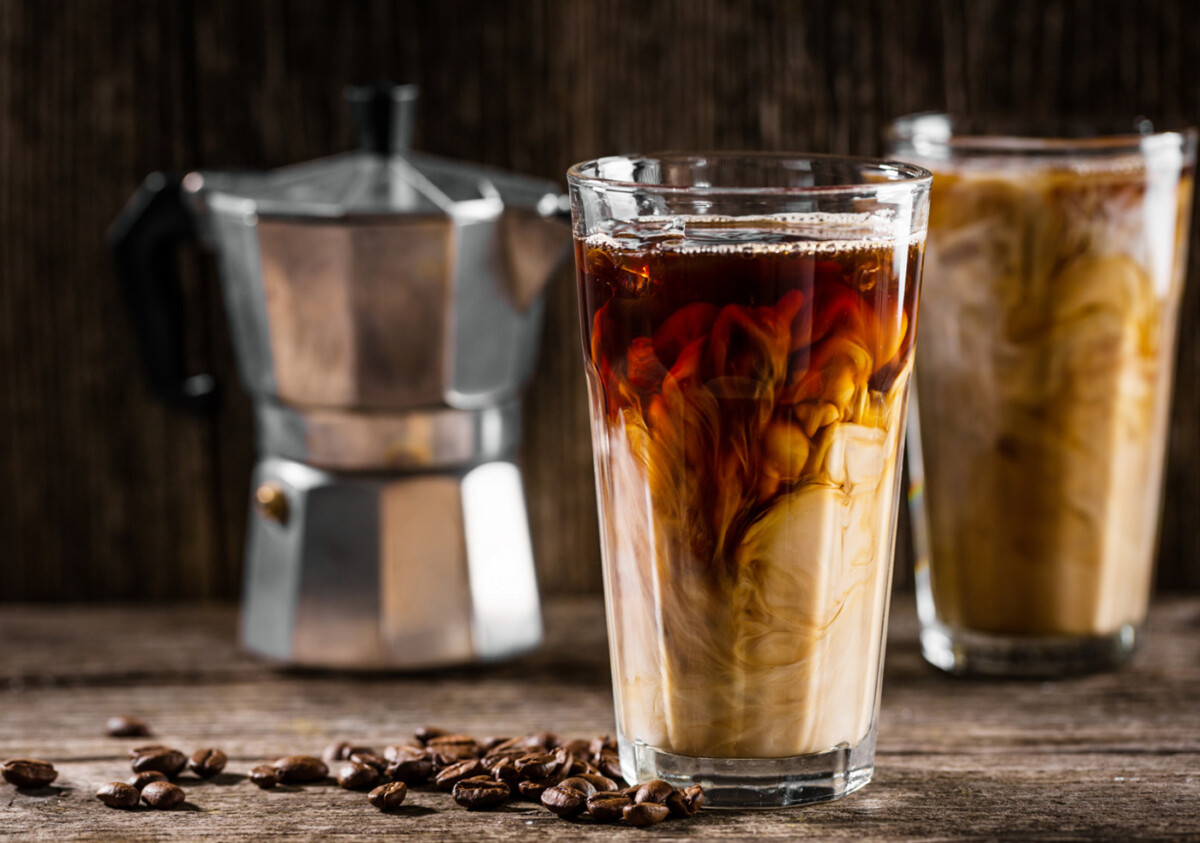
The cold brew was the worst offender. I thought I was being smart. Cold brew is less acidic than hot coffee. It's easier on the stomach. It's refreshing when it's hot outside. But cold brew is also concentrated. A 16-ounce cold brew from most coffee shops contains between 300 and 400 milligrams of caffeine. That's my entire daily intake in one drink. And because it's cold and smooth, I drank it faster than I would drink hot coffee. I was essentially mainlining caffeine while my body was already under heat stress. The cold temperature masked the stimulant effect. It felt like hydration because it was cold and wet. It was not hydration. It was the opposite of hydration. And I was drinking it in quantities that would have been problematic even in winter, let alone during a heat wave in an apartment that felt like a sauna.
I tried switching to iced tea. Green tea has less caffeine. It's more hydrating because it's mostly water. But in the heat, even the 40 milligrams of caffeine in a cup of green tea was enough to disrupt my already-fragile sleep. I tried decaf. That worked better, but decaf still has 5 to 10 milligrams per cup, and I was drinking six cups a day. That's 30 to 60 milligrams, which isn't nothing when your system is already overloaded. And the psychological withdrawal was brutal. I had headaches for three days. I was irritable. I couldn't focus. I snapped at a coworker over a Slack message about quarterly reports. I fell asleep in a meeting. The Zoom camera was off, thank god, but still. It was embarrassing.
The solution, when I finally found it, was not what I wanted to hear. I had to cut my caffeine in half during heat waves. Not eliminate it—I know my limits, and complete withdrawal makes me a monster—but reduce it to 150 to 200 milligrams on days when the indoor temperature was above 80°F. I had to drink a liter of water before my first cup of coffee. I had to stop all caffeine after 1 PM, which in Seattle in June means stopping before lunch because the sun doesn't set until after 9 PM and my body clock is already confused. And I had to accept that I was going to be tired. That the heat was going to make me tired, and the reduced caffeine was going to make me tired, and that was just the reality of living through a heat wave without air conditioning.
It worked. After a week of the new protocol, my heart rate was back to normal. I was sleeping six hours instead of four. The dizziness went away. I stopped feeling nauseous in the afternoons. And I realized that my "normal" caffeine habit had been masking the fact that I was chronically dehydrated and sleep-deprived, and the heat had just ripped the mask off. The urgent care visit wasn't a fluke. It was the inevitable result of consuming a diuretic stimulant in an environment where my body needed the exact opposite: water, rest, and cool.
I'm angry that nobody talks about this. The coffee industry markets cold brew as a summer drink. The health blogs tell you to "stay hydrated in the heat" in one article and "here's why you need your morning coffee" in the next. They don't tell you that those two pieces of advice are in direct conflict. They don't tell you that caffeine and extreme heat are a dangerous combination that can land you in urgent care with a heart rate of 112 and a doctor who looks at you like you're an idiot. Because we don't talk about heat as a health issue in Seattle. We're supposed to be the mild city. The city where you don't need air conditioning. The city where summer is two weeks in August and the rest is drizzle. That city is gone. And our habits—our coffee habits, our hydration habits, our sleep habits—haven't caught up to the new reality.
So here's my advice, from someone who learned the hard way. If it's over 80°F in your home, cut your caffeine in half. Drink water first. Coffee second. Stop caffeine by early afternoon. And if you feel dizzy, nauseous, or like your heart is trying to escape your chest, it's not just the coffee. It's the coffee plus the heat. And that's a combination that can hurt you.
Anyone else had to rethink their caffeine game because of the heat? Because I'm starting to think Seattle's coffee culture needs a summer safety briefing.
The thing that really messed me up was the way caffeine interacts with heat at the cellular level. I spent an evening reading about thermoregulation and stimulant pharmacology because I was terrified and needed to understand what had happened to my body. Caffeine blocks adenosine receptors in the brain, which is why you feel alert. But adenosine isn't just a sleepiness signal. It's also involved in vasodilation—the widening of blood vessels that helps your body release heat. When caffeine blocks adenosine, it causes vasoconstriction. Your blood vessels narrow. That's why caffeine can raise blood pressure. In a cool environment, that's a minor effect. In a heat wave, it's catastrophic. Your body is trying to dump heat by sending blood to the skin surface. Caffeine is actively preventing that. So your core temperature stays elevated. You feel hot, but you can't cool down. And you don't realize why because the caffeine is also making you feel energetic and mentally sharp. It's a trap.
I tested this on myself because apparently I have a death wish. On a day when my apartment was 86°F, I drank my normal 350mg of caffeine and measured my skin temperature and core temperature every hour for six hours. My skin temperature stayed lower than it should have been. My core temperature climbed from 98.6°F to 99.4°F. That's not fever territory, but it's close. And it's a sign that my body was struggling to dissipate heat. The next day, with the same indoor temperature, I drank only 150mg of caffeine and did the same measurements. My core temperature stayed at 98.6°F. My skin temperature was higher—my blood vessels were doing their job. I felt hotter, but I was actually cooler where it mattered. That's the paradox. Caffeine makes you feel less hot while making you more hot. It's like drinking alcohol in the cold. You feel warm because your blood vessels are dilating at the surface, but you're actually losing core temperature. Caffeine does the opposite. You feel fine because your brain is stimulated, but your core is overheating.
The cognitive effects were another surprise. I thought caffeine helped me think clearly in the heat. It didn't. On high-caffeine, high-heat days, I made more mistakes at work. I sent emails to the wrong people. I miscalculated a budget projection by $12,000. I forgot a meeting. My brain felt like it was working, but it wasn't. The combination of mild heat stress and high caffeine created a kind of functional mania. I was active, verbal, busy—but not accurate. Not careful. Not smart. When I cut the caffeine in half, I felt slower. But I was actually better. My error rate dropped. My memory improved. I was less reactive, less jittery, more capable of sitting with a problem and working through it. The heat was still making me tired, but the reduced caffeine let me use the energy I had more effectively.
I also noticed that my anxiety spiked on high-caffeine heat days. I have low-level anxiety anyway. Most people do. But caffeine amplifies it, and heat amplifies it, and together they created a perfect storm of worry. I was anxious about work. Anxious about the heat. Anxious about whether my apartment was going to get hotter. Anxious about whether I was drinking too much coffee. Anxious about whether I was drinking too little water. The anxiety was so constant that I didn't even recognize it as unusual until I cut the caffeine and realized that my baseline anxiety level was actually much lower than I'd been experiencing. I'd been living in a state of low-grade panic for weeks and blaming it on the heat. It was the heat plus the coffee. The heat made the coffee worse. The coffee made the heat worse. And my brain was the battlefield.
My coworker, who drinks even more coffee than I do, told me he had a similar experience. He woke up at 3 AM with his heart pounding, convinced he was having a heart attack. He called 911. By the time the paramedics arrived, his heart rate had dropped and he felt foolish. They told him it was a panic attack, probably triggered by caffeine and heat. He was embarrassed. He didn't tell anyone at work. But he cut his coffee intake in half the next day. "I felt like an idiot," he told me. "But I also felt like I was dying. And I'd rather feel like an idiot than actually die." I know exactly what he means. The urgent care visit was humiliating. But it was also clarifying. It showed me that my habits were built for a climate that no longer exists. And I had to change them, or I was going to keep having days where my heart raced and my vision blurred and I wondered if I was about to pass out at my desk.
So here's the protocol I use now. It's not perfect. It's not what I want. But it keeps me alive and functional. On days under 75°F indoors, I drink my normal coffee. On days between 75°F and 82°F, I cut to 250mg. On days over 82°F, I cut to 150mg. I drink a liter of water before any caffeine. I stop all caffeine by 1 PM. I add an electrolyte tablet to my water on the hottest days because caffeine depletes sodium and potassium along with fluid. And I keep a thermometer on my desk so I can't pretend it's not that hot. The thermometer is the most important part. Because without it, I will convince myself that I'm fine, that one more cold brew won't hurt, that I can handle it. I can't. None of us can. Not in 90-degree apartments with no AC and a coffee shop on every corner selling 400mg caffeine bombs in iced form.
Seattle's coffee culture is going to have to adapt. The baristas are already seeing it. More people asking for half-caf. More people switching to iced tea. More people asking for "something light" because they're feeling jittery. The coffee shops don't know what to do with this. Their business model is built on selling as much caffeine as possible. But their customers are getting sick. And the heat isn't going away. Next summer will be hotter. The summer after that will be hotter still. And eventually, someone is going to end up in the ER—not urgent care, the actual ER—with a caffeine-induced arrhythmia during a heat wave. And then we'll have to have the conversation that I'm having now, alone in my apartment, with a thermometer and a water bottle and a strict limit on how much coffee I allow myself.
I'm not anti-coffee. I love coffee. I love the ritual of it. The smell. The first sip in the morning. The way it makes my brain feel like it's coming online. But I love not feeling like I'm dying more. And in a heat wave, those two loves are in conflict. The coffee wants me to be alert and productive. The heat wants me to be cool and hydrated. I can't have both. I have to choose. And I'm choosing survival. Even if it means drinking less coffee than I want. Even if it means feeling tired in the afternoon. Even if it means admitting that my body has limits and the climate is testing them. Because the alternative is another urgent care visit. And the next one might not end with an IV and a lecture. The next one might end with something much worse.
