The Monday I Accidentally Drank 600mg of Caffeine Before Noon
The pipette did not slip this time. The mistake was much bigger than a smeared calibration line. I had miscalculated my intake by 300 milligrams, and I realized it at 11:47 AM when my hands started shaking so badly I could not type an email.
I am a CYP1A2 slow metabolizer. I have the genetic test to prove it. I feel 200mg of caffeine the way a fast metabolizer feels 400mg. And on this particular Monday, I had consumed 600mg before my second cup of coffee was even cold.
Here is how it happened. Sam had made tea — real English Breakfast, not decaf — at 7:00 AM. She does this every morning. She is a fast metabolizer. She can drink black tea at 9 PM and fall asleep by 10:30. I have watched her do it. It is both fascinating and deeply unfair.
I had my usual pour-over at 7:30. Sixteen ounces, about 200mg. I was fine. I was calm. I was ready for the day.
At 9:15, I opened a new sample that had arrived in the mail. A pre-workout powder from a company I will not name. The label said 200mg per scoop. I took half a scoop to test it — 100mg. I logged it in my spreadsheet. I was still at 300mg total. Still within the FDA's 400mg daily limit. Still fine.
But the label was wrong. Or I misread it. Or the company had reformulated and not updated the website. When I checked later — much later, after the panic had subsided — I realized the actual caffeine content was 400mg per scoop. I had taken half. That was 200mg. Plus my coffee. Plus Sam's tea, which I had finished because she left for work and I did not want to waste it.
600 milligrams. By 10:30 AM. In a body that clears caffeine at roughly half the speed of a normal person.
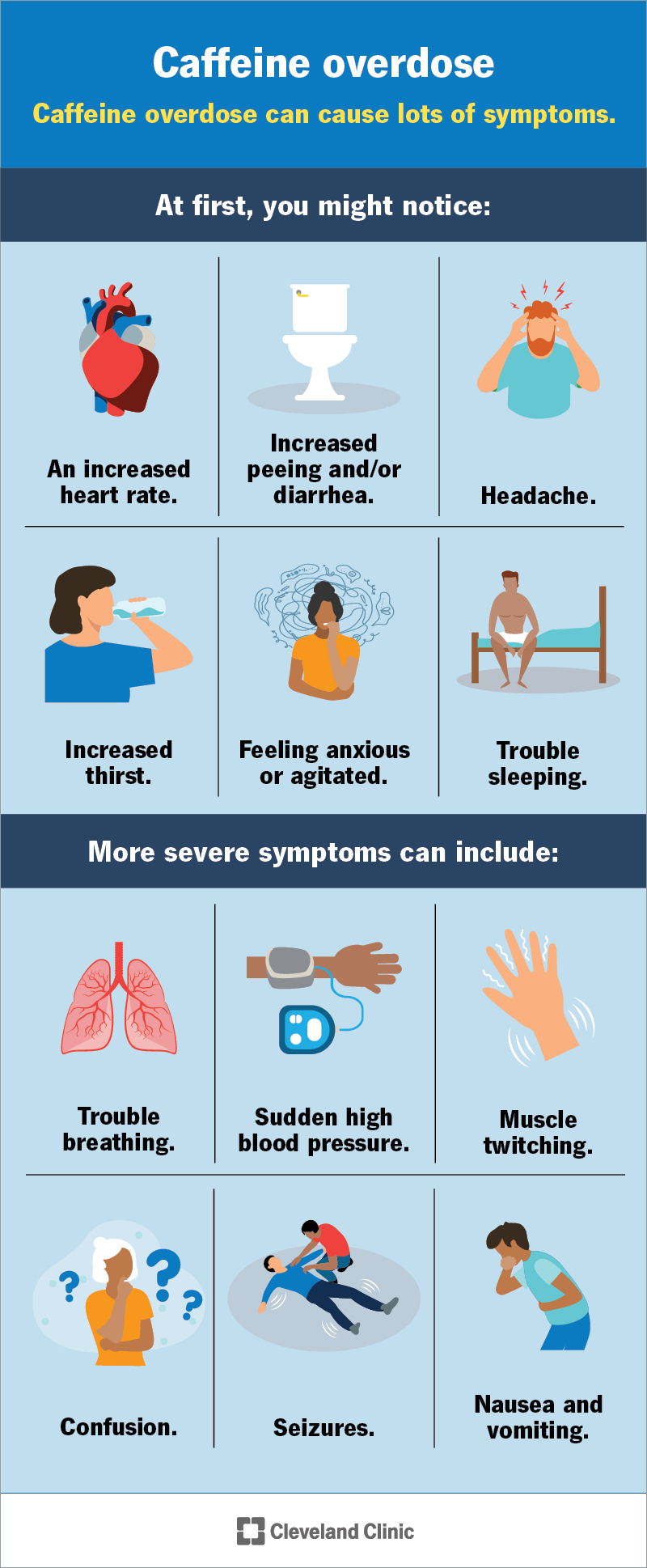
The first symptom was not the shakes. It was the anxiety. A low-grade hum of worry that started around 10:45. I was checking my email and I noticed my heart rate was elevated. Not dramatically — maybe 95 beats per minute. But my resting is 62. I wear a continuous monitor. I have the data.
By 11:15, the anxiety had sharpened into something closer to panic. I was sitting at my desk in the loft, staring at a spreadsheet of caffeine half-lives, and I could not focus on the numbers. My vision felt slightly too bright. The screen seemed to pulse. I checked my monitor: heart rate 112. Blood pressure 138/92. Not dangerous. But not normal.
The shakes started at 11:47. I was trying to respond to an email from a colleague at WSU about a study on CYP1A2 polymorphisms, and I could not type the word "metabolism" without hitting three wrong keys. I looked at my hands. They were trembling. Fine tremors, like a Parkinson's patient in the early stages. I knew it was the caffeine. I knew it would pass. But knowing and feeling are different things.
I called Sam. She answered on the second ring. I said, "I messed up." She said, "How much?" I said, "600." She said, "Before noon?" I said, "Yes." She was quiet for a moment. Then she said, "Drink water. Eat something. Do not take your afternoon tea. And do not panic."
I followed her instructions. I drank two liters of water over the next hour. I ate a sandwich — carbs and fat, which can modestly slow caffeine absorption. I lay down on the couch with Espresso, who sensed my distress and purred at maximum volume. She is 16 years old and her primary survival strategy is loud purring. It works.
The peak effects lasted about four hours. By 2:00 PM, my heart rate had dropped to 85. By 3:30, it was back to 70. The tremors stopped around 4:00. But the anxiety lingered — a low-grade unease that followed me until dinner. I could not concentrate on work. I could not read. I could not even enjoy the Ethiopian coffee I had planned to cup that afternoon. I dumped it down the drain. It felt like a waste of a good Yirgacheffe, but I was not taking any chances.
Here is what I learned. Not about caffeine — I already knew the pharmacokinetics. I learned about the gap between knowledge and behavior. I knew my genotype. I knew my sensitivity. I knew the half-life of caffeine in slow metabolizers averages 8 hours, which means 600mg at 10:00 AM would still leave 150mg in my system at 6:00 PM. I knew all of this. And I still made the mistake because I trusted a label and I did not double-check.
That is the thing about being a researcher. You think data protects you. You think knowing the science makes you immune to the risks. It does not. Knowledge without vigilance is just trivia. And on that Monday, I was trivia.
I did not sleep well that night. I fell asleep around 11:30 — late for me — and I woke up at 3:15 AM with my heart racing. Not from caffeine — the levels were low by then — but from the anxiety that had become self-perpetuating. I lay in the dark and listened to Sam breathe. I counted my breaths. I waited for morning.
The next day, I threw away the pre-workout sample. I did not review it. I did not test it again. I put it in the trash and I took the trash out. Then I updated my spreadsheet with a new rule: never trust a single source for caffeine content. Always cross-reference. Always verify.
Caffeine is a tool. I still believe that. But tools can hurt you if you use them carelessly. And I had been careless. Not because I am stupid. Because I am human. And humans make mistakes, even — especially — the ones who think they know better.
— Alex, from the loft in Seattle, where the coffee is strong but the metabolizer is slow.
